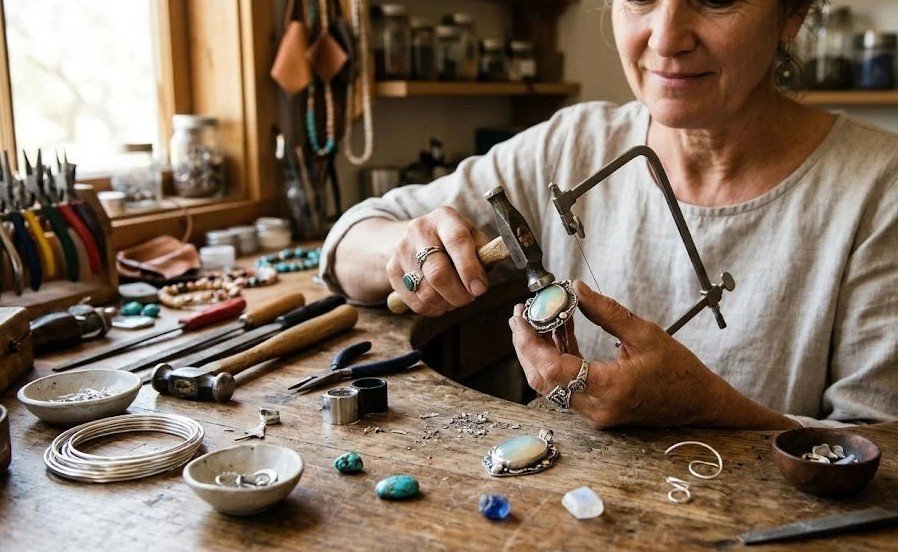
I’ve always thought that jewelry should be more than something pretty to look at. The best pieces become part of our memories, remind us of someone special, or help us express a side of our personality that clothing alone can’t quite capture. That’s one reason handmade jewelry continues to attract people who want something different from the accessories they see everywhere else.
The beauty of artisan jewelry is that no two creative processes are exactly alike. Even when two makers use similar materials, their techniques, design choices, and finishing touches can produce very different results.
If you’re looking for handmade jewelry that’s unique, understanding the materials, craftsmanship, design possibilities, and care requirements can help you find pieces you’ll enjoy wearing for years. And if you’re a jewelry maker, these same ideas can help you create designs that stand out in a crowded market.
What Makes Handmade Jewelry Unique?
Handmade jewelry is created through hands-on techniques rather than being produced entirely through automated, mass-production processes. Depending on the design, a maker might cut metal, shape wire, set stones, string beads, carve materials, or assemble individual components by hand.
The term covers a wide range of styles, from simple everyday accessories to elaborate statement pieces. Some artisans create jewelry entirely from raw materials, while others combine handcrafted elements with professionally manufactured findings or chains.
What makes a particular piece unique often comes down to its design and production process. Small variations in texture, shape, color, and arrangement can give handcrafted jewelry a character that feels different from standardized accessories.
Every Piece Can Have Its Own Character
One of the most appealing qualities of unique handmade jewelry is the individuality of each piece. A maker might create ten pairs of earrings using the same basic design, but slight differences in bead placement, hammered texture, or stone patterns can make each pair feel personal.
This doesn’t mean handmade jewelry must look imperfect. Skilled artisans often work carefully to achieve consistent dimensions and polished finishes while preserving the subtle details that make their work distinctive.
For example, a hand-forged silver ring may feature tiny hammer marks that catch the light differently from a smooth, machine-finished band. Those marks can become part of the design rather than flaws that need to be hidden.
Handmade Jewelry Often Reflects the Maker’s Creativity
Artisan jewelry gives makers room to experiment with unexpected materials, unusual shapes, and combinations that may not fit traditional manufacturing methods. One designer might combine recycled silver with freshwater pearls, while another uses colorful glass beads, fabric, or carved wood.
These creative decisions can give handmade accessories a recognizable visual identity. Some makers prefer minimalist designs, while others create bold, sculptural pieces that immediately draw attention.
When shopping, I recommend looking beyond whether a piece is fashionable at the moment. Ask yourself whether the design feels like something you’d still enjoy wearing when the current trend has passed.
Popular Types of Unique Handmade Jewelry
Handmade jewelry comes in countless forms, so finding a style you love is often easier when you understand the main categories. Each type offers different opportunities for personal expression, material choices, and everyday styling.
Handmade Earrings
Handmade earrings are a simple way to add personality to an outfit without changing your entire wardrobe. They range from tiny metal studs and delicate hoops to colorful beaded drops and oversized sculptural designs.
For everyday wear, small hoops, minimalist geometric earrings, and lightweight dangles are practical options. If you want something more noticeable for a party or special event, statement earrings made with layered shapes, unusual stones, or contrasting colors can become the focal point of your look.
Weight is worth considering, especially with large earrings. A beautiful pair may look fantastic in a product photo, but if it pulls uncomfortably on your earlobes after an hour, you’re probably not going to wear it very often.
When buying handmade earrings, check the materials used for the ear wires or posts. People with sensitive ears may prefer appropriately labeled titanium, niobium, or suitable nickel-free components, although individual sensitivities vary.
Unique Handmade Necklaces
Handmade necklaces can be delicate, bold, symbolic, or completely unconventional. Popular designs include wire-wrapped pendants, gemstone necklaces, beaded strands, layered chains, and pieces featuring personalized charms.
A necklace with an irregular natural stone can feel very different from one made with identical polished beads. The stone’s color variations and natural markings may give the pendant a distinctive appearance.
Length also makes a difference. A short necklace can highlight the neckline of a simple top, while a longer pendant may work beautifully with a plain dress, sweater, or button-down shirt.
If you love layering necklaces, try combining different chain lengths and textures rather than choosing pieces that all sit at the same point. Two or three carefully selected necklaces often create a more balanced result than a large number of competing designs.
Artisan Rings
Handmade rings are especially appealing because they can be both decorative and deeply personal. Some artisans create smooth, minimalist bands, while others work with textured metals, colorful stones, engraved details, or unusual shapes.
A handcrafted ring can also become a meaningful gift for a birthday, anniversary, graduation, or other milestone. Choosing a stone, finish, or engraving that connects to the recipient’s interests can make the piece feel more thoughtful.
Before purchasing a ring online, confirm the sizing system and whether the seller offers resizing. Wide bands can fit differently from narrow rings, and some designs with delicate stone settings may be difficult or expensive to resize later.
Handmade Bracelets
Handmade bracelets are versatile accessories that work with casual outfits, office clothing, and more formal looks. They may feature woven threads, glass beads, natural stones, metal links, leather, or combinations of different materials.
A simple beaded bracelet can add a touch of color to a neutral outfit, while a hammered metal cuff offers a more architectural appearance. Personalized bracelets featuring initials, charms, or engraved messages can also make meaningful gifts.
Pay attention to the clasp and construction, not just the appearance. A bracelet that opens unexpectedly or has weak connections can be frustrating, especially if it contains valuable beads or stones.
Handmade Jewelry Sets
Some artisans create coordinated earrings, necklaces, and bracelets designed to be worn together. These handmade jewelry sets can be useful for weddings, formal events, and occasions when you want a coordinated appearance without spending hours matching accessories.
However, you don’t have to wear every piece in a set at once. A necklace from a coordinated collection may look just as good with a different pair of earrings you already own.
When buying a set, consider whether each item works independently. Pieces that fit naturally into your existing wardrobe will usually provide more long-term value than accessories you only wear together on rare occasions.
Materials That Make Handmade Jewelry Special
Materials influence a piece’s appearance, comfort, durability, and price. Understanding the basics can help you choose jewelry that suits your preferences and avoid surprises after purchase.
Sterling Silver
Sterling silver is a popular choice for handmade jewelry because it can be shaped, polished, textured, and combined with many different stones. Standard sterling silver is generally made from 92.5% silver, with the remaining portion consisting of other metals, commonly copper.
It works well for rings, earrings, pendants, bracelets, and decorative metalwork. Over time, sterling silver can tarnish through reactions with substances in the environment, but appropriate cleaning and storage can help maintain its appearance.
When shopping, look for clear material descriptions rather than relying on terms such as “silver-colored.” A piece with a silver-colored finish may use a different underlying metal, which can affect durability and care requirements.
Gold and Gold-Filled Components
Gold is valued for its warm appearance and association with fine jewelry. Handmade gold jewelry can range from delicate chains and simple rings to elaborate pieces featuring gemstones or intricate metalwork.
Gold-filled components are different from solid gold. Gold-filled materials have a mechanically bonded layer of gold over a base metal, while gold-plated pieces generally use a thinner deposited coating.
These distinctions matter because the materials can wear differently over time. Always check whether a seller is describing solid gold, gold-filled material, or gold plating, and confirm the karat or other relevant specifications where applicable.
Natural Gemstones
Gemstones bring color, pattern, and visual interest to handmade jewelry. Depending on the design, artisans may use amethyst, turquoise, moonstone, garnet, quartz, agate, or many other stones.
Natural stones often contain variations in color, inclusions, and pattern. These characteristics can make a pendant or ring feel distinctive, although not every variation is automatically evidence that a stone is natural or untreated.
If gemstone authenticity matters to you, ask the seller how the stone is identified and whether any treatments are known. Treatments such as heating, dyeing, or stabilization can affect appearance and care requirements.
Glass Beads and Colorful Materials
Glass beads offer makers an enormous range of colors, shapes, and finishes. They can be used in delicate necklaces, playful earrings, woven bracelets, and intricate statement pieces.
Some artisans also work with ceramic beads, polymer clay, enamel, fabric, and resin. These materials can create bold, contemporary jewelry without relying exclusively on precious metals or gemstones.
The key is to choose materials that fit the intended use. For example, a large pair of polymer clay earrings may be relatively lightweight, while a similar-looking design made from solid metal could be considerably heavier.
Wood, Shell, and Other Natural Materials
Wood and shell can give handmade jewelry an organic appearance that feels relaxed and distinctive. These materials are often used in pendants, earrings, beads, and sculptural accessories.
Natural materials can vary in color and texture, making each piece visually different. However, they may require special care around water, high humidity, chemicals, or prolonged exposure to sunlight.
Ask how a piece has been sealed or finished and whether it is suitable for regular daily wear. A little information about care can help preserve the material’s appearance.
How to Find Handmade Jewelry That Is Truly Unique
Finding unusual jewelry requires more than searching for the word “handmade.” Many online marketplaces feature thousands of accessories, and product descriptions don’t always explain how much of the design or production was completed by the seller.
A few practical checks can help you identify pieces that genuinely match your expectations.
Look for Detailed Product Descriptions
A good product listing should explain the materials, dimensions, construction, and care instructions. For earrings, the listing should ideally include the total length and a description of the posts or hooks.
For rings, check the sizing information and whether the design can be adjusted. For necklaces, look for chain length, pendant dimensions, and clasp details.
If the listing simply says “unique handmade jewelry” without explaining what the item is made from, ask for clarification before purchasing. Clear answers are a good sign that the seller understands the product.
Examine the Craftsmanship
Product photos can tell you quite a bit about the construction of handmade jewelry. Look for clear images of clasps, connections, stone settings, soldered joints, and the back of the piece when those details are relevant.
For beaded jewelry, check whether the arrangement looks secure and whether the components appear evenly finished. For metal jewelry, look for smooth edges where the design calls for them and secure settings around any stones.
Remember that different styles have different standards of finish. A deliberately rough, hammered surface may be part of an artisan’s design, while a sharp edge that catches on clothing could be a genuine quality issue.
Read Reviews Carefully
Customer reviews can reveal useful details that aren’t obvious from product photographs. Look for comments about comfort, sizing accuracy, packaging, durability, and whether the item matches its description.
Photos from previous buyers can be especially helpful because they may show the jewelry under ordinary lighting rather than studio conditions. They can also give you a better sense of scale.
Don’t rely on a single glowing review or assume that a high rating guarantees perfect quality. Look for repeated patterns across multiple reviews and pay attention to how the seller handles problems.
Ask About Customization
Many independent jewelry makers offer customization options, although the available choices depend on their materials, tools, and production schedule. You might be able to select a chain length, metal finish, bead color, gemstone, or engraving.
A personalized piece can be a good choice when you’re shopping for a gift or want jewelry that reflects a particular memory. Before ordering, confirm the design details, production timeline, and return policy.
Custom jewelry may be nonreturnable or subject to different return conditions, so it’s worth checking the seller’s terms before paying. Keep written confirmation of the requested specifications to reduce the risk of misunderstandings.
Why Handmade Jewelry Makes a Meaningful Gift
Jewelry has long been used to celebrate relationships, milestones, and personal achievements. Handmade designs can make these gifts feel especially thoughtful because the materials, colors, and details can be chosen with a specific person in mind.
A gift doesn’t have to be expensive to be meaningful. Sometimes a small pair of earrings in someone’s favorite color or a bracelet engraved with an important date feels more personal than a costly accessory selected without much thought.
Personalized Jewelry for Birthdays
For birthdays, consider a design that reflects the recipient’s taste rather than choosing something simply because it is popular. A minimalist necklace may suit someone who prefers understated accessories, while colorful statement earrings could be perfect for someone who enjoys bold fashion.
Birthstones and engraved initials are common personalization options, but they’re not the only possibilities. You could choose a stone in the recipient’s favorite color or a charm connected to a hobby or meaningful place.
If you’re unsure about their style, look at the jewelry they already wear. Notice whether they prefer gold or silver tones, delicate or bold designs, and simple or colorful accessories.
Handmade Jewelry for Anniversaries
For anniversaries, handmade rings, pendants, and bracelets can serve as lasting reminders of a relationship. An engraved date, a meaningful symbol, or a gemstone associated with a shared memory can make the design more personal.
Discuss durability and maintenance before choosing a piece intended for everyday use. Rings and bracelets may experience more contact with hard surfaces than pendants worn occasionally.
If the jewelry includes a delicate setting or soft gemstone, ask the maker whether it is suitable for frequent wear. A beautiful gift should also be practical for the person receiving it.
Thoughtful Gifts for Friends and Family
Handmade jewelry can be a lovely gift for graduations, holidays, thank-you gestures, and other personal milestones. Small pieces are often easier to choose when you know the recipient’s favorite colors or preferred style.
For someone who rarely wears jewelry, consider lightweight earrings, a simple pendant, or a bracelet with an adjustable fit. For a person who already loves accessories, a more unusual artisan design may offer something they don’t already own.
Packaging can also make the experience feel special. Many makers offer gift boxes or handwritten notes, but check whether these options are included before placing your order.
How to Style Unique Handmade Jewelry
One of the best things about handmade accessories is their ability to make familiar clothing feel different. You don’t need a completely new wardrobe to create fresh looks; sometimes a carefully chosen necklace or pair of earrings is enough.
Pair Statement Jewelry With Simple Clothing
If you’re wearing a bold handmade necklace or large sculptural earrings, try keeping the rest of your outfit relatively simple. A plain T-shirt, neutral sweater, or solid-color dress can give the jewelry room to stand out.
This approach is especially useful for accessories with unusual shapes or bright colors. Too many competing patterns can make the overall look feel crowded, although mixing prints can work when the colors and proportions are balanced.
Think of one piece as the main focal point. Once you’ve chosen that item, select supporting accessories that complement it rather than compete for attention.
Mix Metals and Textures
You don’t always need to match every metal in your jewelry collection. Gold-toned chains can work alongside silver pieces, while smooth metal accessories can complement textured beads or natural stones.
The trick is to create a sense of connection between the items. Repeating a shape, color, or finish can make a combination feel intentional even when the materials are different.
For example, a silver pendant with blue stones might work nicely with small gold hoops and a bracelet that includes both tones. Try combinations in front of a mirror and adjust the number of pieces until the overall look feels balanced.
Layer Necklaces With Different Lengths
Layering handmade necklaces creates visual interest without requiring oversized accessories. Choose pieces with different chain lengths so each pendant has space to be seen.
You can combine a short, simple chain with a medium-length pendant and a longer strand of beads. If all three necklaces have large pendants, however, they may tangle or compete with each other.
Start with two necklaces and add a third only if the arrangement feels comfortable. Consider the neckline of your clothing as well, because some layered combinations work better with open collars than with high-neck tops.
Wear Handmade Jewelry With Everyday Outfits
Handmade jewelry doesn’t need to be reserved for weddings or special events. Small hoops, simple rings, beaded bracelets, and understated pendants can become part of your everyday wardrobe.
For casual clothing, choose accessories that feel comfortable and don’t interfere with your daily activities. If you work with your hands, for example, bulky rings or loose bracelets may be less practical than small earrings or a short necklace.
The most useful jewelry collection is one you actually wear. Choose pieces that fit your routine as well as your personal style.
Caring for Handmade Jewelry So It Lasts
Even beautifully crafted jewelry needs proper care. The best cleaning and storage methods depend on the materials, so avoid assuming that every piece can be treated the same way.
Store Jewelry Separately
Keeping jewelry in separate compartments or soft pouches can help prevent scratches, tangling, and damage. Chains are particularly prone to knots when several necklaces are placed together.
Silver may tarnish over time, so storing it in a suitable dry environment can help reduce exposure to moisture and other substances. Avoid placing delicate pieces where they can be crushed or caught on other accessories.
For jewelry containing gemstones, pearls, wood, or resin, follow the maker’s care instructions. Some materials are more sensitive to heat, chemicals, or abrasion than others.
Clean Jewelry According to Its Materials
A soft, clean cloth is often useful for removing fingerprints and light surface residue from many metal pieces. However, certain gemstones and finishes require more specific cleaning methods.
Don’t automatically use ultrasonic cleaners, abrasive polish, or household cleaning products on handmade jewelry. These methods can damage delicate stones, loosen settings, remove finishes, or affect adhesives.
When in doubt, ask the artisan for instructions. A maker who knows the materials and construction of the piece may be able to recommend the safest approach.
Protect Jewelry From Water and Chemicals
Perfume, lotions, cleaning products, and chlorinated water can affect some metals, coatings, adhesives, and natural materials. Removing jewelry before swimming, cleaning, or applying cosmetics can help reduce unnecessary exposure.
This is particularly important for plated jewelry and pieces containing materials that are not designed for prolonged contact with moisture. Even when a product is marketed as water-resistant, check the specific care recommendations.
If a piece becomes wet, dry it gently when appropriate for its materials. Avoid using heat to speed up the process unless the maker confirms that it is safe.
Starting a Handmade Jewelry Business
Handmade jewelry can also be a creative business opportunity for people who enjoy design and working with their hands. However, creating beautiful products is only one part of running a successful jewelry brand.
Makers also need to consider material costs, production time, pricing, photography, packaging, customer service, and marketing. Planning these details early can help prevent a promising creative hobby from becoming financially frustrating.
Develop a Recognizable Design Style
A recognizable design style helps customers understand what makes your jewelry different. You might focus on minimalist silver pieces, colorful polymer clay earrings, nature-inspired pendants, or personalized gemstone accessories.
Start by identifying the materials and techniques you enjoy working with most. Then create a small collection of related designs rather than trying to produce every style at once.
Consistency doesn’t mean every piece must look identical. Instead, use recurring details such as a color palette, shape, texture, or finishing technique to give the collection a recognizable identity.
Calculate Your Prices Carefully
One common mistake among new jewelry makers is charging only for materials. That approach overlooks labor, packaging, equipment, platform fees, marketing, and other business expenses.
A basic pricing worksheet should include the cost of materials, the time required to make each piece, packaging expenses, selling fees, and an allowance for overhead. You should also consider your desired profit and compare your final prices with similar products in the market.
For example, imagine that a necklace uses $12 in materials, takes 45 minutes to make, and requires $3 in packaging and allocated expenses. If you value your labor at $20 per hour, labor adds $15, bringing the preliminary cost to $30 before any additional margin or applicable taxes.
That calculation doesn’t automatically determine the correct retail price, but it helps you understand the minimum cost of producing the item. Without this information, it’s easy to sell plenty of jewelry while earning very little.
Take Clear Product Photographs
Product photography is especially important for handmade jewelry because customers cannot touch or try on items when shopping online. Photos should show the design, scale, materials, and important construction details as accurately as possible.
Natural window light can be a useful starting point for small businesses. Place the jewelry near a window, use a clean background, and avoid direct sunlight that creates harsh reflections or hides details.
Include a close-up image and a photo showing the jewelry being worn or placed beside an object of known size. This helps customers understand proportions and reduces the risk of disappointment when the product arrives.
Write Honest and Specific Product Descriptions
A strong product description explains what the jewelry is made from, how large it is, how it fastens, and how it should be cared for. These details are more useful than relying on general claims such as “beautiful,” “luxurious,” or “one of a kind.”
If a pendant contains a natural stone, describe any known variations or treatments accurately. If the chain is plated rather than solid gold, state that clearly.
Honest descriptions build trust and can reduce unnecessary returns. They also help potential buyers find your products through specific searches such as “handmade sterling silver earrings” or “lightweight polymer clay statement earrings.”
Use SEO to Help Customers Discover Your Jewelry
Search engine optimization can help people discover your handmade jewelry when they are actively looking for a particular style or gift. Start by using descriptive phrases that reflect what the product actually is.
For example, a listing could target phrases such as “unique handmade gemstone necklace,” “artisan silver rings,” “handcrafted beaded earrings,” or “personalized handmade jewelry gift.” Use these phrases naturally in the product title, description, image alt text, and relevant category fields.
Avoid stuffing the same keyword into every sentence. Clear, helpful product information is more useful to shoppers than repetitive wording that makes the listing difficult to read.
You can also publish helpful blog content about jewelry care, choosing gift sizes, understanding metal finishes, or styling statement accessories. These topics answer customer questions while giving your website additional opportunities to appear in relevant search results.
Is Handmade Jewelry Worth Buying?
Handmade jewelry can be worth buying when the design, craftsmanship, materials, and price meet your expectations. It may offer distinctive details, creative designs, and opportunities to support independent artisans, but the label alone doesn’t guarantee superior quality.
Some handcrafted pieces use precious metals and carefully selected gemstones, while others are designed as affordable fashion accessories. Both can be worthwhile purchases when their materials are clearly described and their construction suits the intended use.
Consider how often you’ll wear the piece, whether it matches your existing wardrobe, and how much care it requires. A simple necklace worn several times a week may provide more practical value than an elaborate accessory that stays in a jewelry box.
It’s also worth remembering that handmade does not automatically mean sustainable, locally made, or ethically sourced. If those qualities matter to you, ask specific questions about material sourcing, production methods, and the maker’s practices instead of relying on broad marketing claims.
Frequently Asked Questions About Unique Handmade Jewelry
What Is Considered Unique Handmade Jewelry?
Unique handmade jewelry includes artisan-created accessories featuring distinctive designs, handcrafted components, customized details, or limited production runs. Examples include hand-forged rings, wire-wrapped pendants, beaded earrings, and personalized necklaces.
A handmade item doesn’t have to be completely different from every other piece to be special. It can stand out through its materials, construction, design choices, or the meaning attached to it.
Is Handmade Jewelry Better Than Mass-Produced Jewelry?
Neither category is automatically better. Handmade jewelry may offer more design variety and personalization, while mass-produced jewelry may provide lower prices, standardized sizing, and consistent availability.
The right choice depends on your budget, preferences, and intended use. Check materials, craftsmanship, comfort, and seller information before deciding.
Where Can I Buy Unique Handmade Jewelry?
You can explore independent artisan websites, craft fairs, local jewelry studios, artist markets, and online handmade marketplaces. Shopping directly from a maker may also give you the opportunity to ask questions about materials and customization.
Before buying, review the seller’s policies, product photographs, and customer feedback. Confirm delivery times and return conditions, particularly for personalized or made-to-order items.
How Can I Tell Whether Handmade Jewelry Is High Quality?
Look for accurate material descriptions, secure connections, suitable finishes, comfortable construction, and clear sizing information. Reviews and close-up photographs can help you evaluate these details before purchasing.
For precious metals or valuable gemstones, ask about relevant hallmarks, documentation, or testing where appropriate. A high-quality piece should be described honestly, with any limitations or special care requirements made clear.
Can Handmade Jewelry Be Personalized?
Many artisans offer personalization through engraving, initials, selected colors, different chain lengths, or specific materials. Availability depends on the maker’s techniques and the design.
Confirm the requested details before placing an order, and ask about production time and return policies. Personalized jewelry often makes a thoughtful gift because it can reflect the recipient’s interests or an important memory.
How Do I Care for Handmade Jewelry?
Store pieces separately, avoid unnecessary exposure to chemicals and moisture, and follow cleaning instructions suited to the materials. Silver, pearls, gemstones, plated metals, and resin accessories may all require different care methods.
If you’re uncertain, contact the maker before using a cleaning solution or polishing tool. A few simple precautions can help preserve the appearance and condition of your jewelry.
Final Thoughts: Celebrate Your Style With Unique Handmade Jewelry
Unique handmade jewelry offers a wonderful way to express personal style through carefully chosen materials, creative designs, and meaningful details. From delicate silver necklaces to colorful beaded earrings and sculptural rings, there are options for almost every taste and budget.
The best approach is to choose pieces that feel authentic to you rather than buying accessories simply because they’re trending. Pay attention to craftsmanship, material descriptions, comfort, and care requirements so that your jewelry looks good and fits your everyday life.
If you’re buying a gift, consider the recipient’s personal style and the story you’d like the piece to represent. If you’re creating jewelry yourself, focus on developing a recognizable design style, pricing your work fairly, and sharing accurate product information with potential customers.
At the end of the day, handmade jewelry is about more than decoration. It’s an opportunity to celebrate creativity, support individual makers, and wear something that feels a little more personal than the ordinary accessories found everywhere else.